Mental Health Support Teams (MHSTs) are a service linked to Hampshire CAMHS, designed to improve access to mental health support for children and young people aged 5–18.
MHSTs work directly with schools and colleges to provide early intervention, helping children and young people to manage emerging mental health difficulties and supporting school communities to promote emotional wellbeing before they meet CAMHS threshold.
Our mission and values
Through early support and close collaboration with children and young people, families, schools and college staff, we help to enable healthy minds and thriving school communities.
We aim to:
- Offer a safe, supportive space to work collaboratively and transparently
- Value each child or young person for who they are and where they are
- Focus on strengths and individual needs while addressing mental health needs early
Our staff values include:

How MHSTs support children, young people and schools
MHSTs deliver support in three key ways:
- Direct support for children and young people
Our practitioners work with children, young people and parents to support mild to moderate mental health difficulties, using CBT‑informed and Cognitive Behavioural Therapy (CBT) interventions where appropriate.
This can include support for:
- Low mood
- Anxiety and worry
- Phobias
- Trauma symptoms (PTSD)
- Obsessive compulsive difficulties (OCD)
Support may be offered:
- One‑to‑one
- In groups
- Through parent‑focused work
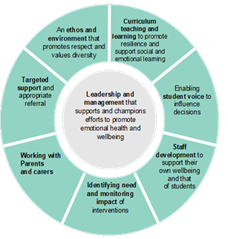
- Supporting a whole‑school approach to mental health
MHSTs work alongside schools and colleges to strengthen a whole‑school approach to emotional wellbeing, helping settings to:
- Build a positive mental health culture
- Identify and respond to need early
- Embed wellbeing into everyday practice
- Advice, consultation and system partnership
We provide timely advice and consultation to school and college staff and work closely with other services so that children and young people can access the right support at the right time and remain engaged in education wherever possible.
Working with schools and other services
MHSTs work closely with schools to build confidence, skills and sustainable wellbeing practice. Support may include:
- Training and workshops for staff, parents and children
- Ambassador and wellbeing champion programme
- Wellbeing reflective audits
- School events
We also work in partnership with:
- Specialist CAMHS services
- Public Health Nursing
- School counselling services
- Educational Psychology
- Hampshire County Council
- Public Health
- Voluntary and community sector organisations
This helps ensure joined‑up support around each child or young person.
Mental Health Forums
MHSTs facilitate Mental Health Forums for education professionals, providing:
- Space for shared learning
- Confidential case discussion
- Best‑practice development
Forums are available for:
- Primary schools
- Secondary schools
- Specialist schools
- Colleges
- Early Years settings
These forums are open to all schools, including those not currently linked to an MHST. Please see our Hampshire CAMHS events page for further details.
Frequently asked questions
Where are MHSTs based in Hampshire?
Hampshire CAMHS currently has 13 MHSTs, covering approximately 50% of schools and colleges across the county.
MHSTs are linked to schools in:
Havant, Gosport, Fareham, Basingstoke, Alton & Petersfield, Winchester, Eastleigh, Romsey and district, New Forest, Andover. There is also a county‑wide specialist MHST, supporting Specialist schools
By 2029, we aim to expand Mental Health Support Team (MHST) coverage through the development of additional teams, ensuring that all schools and colleges across Hampshire have the opportunity to access MHST support. The roll-out of these teams will follow a phased approach, with schools and colleges selected based on a range of criteria, including identified levels of need, existing provision, geographical coverage, and readiness to engage with the MHST model. Priority will be given to settings where there is the greatest potential to improve early intervention and reduce inequalities in access to mental health support. This approach will enable a sustainable and equitable expansion of services, while maintaining the quality and effectiveness of support provided to children and young people.
Which schools currently have access to an MHST?
Please see the attached document for details in relation to which schools currently have access to an MHST and which MHST team they are working with.
How have the current schools become part of an MHST?
The role out of MHST placement is a phased approach and guided by NHS England and local commissioning arrangements. Each MHST is commissioned to provide support to:
- Approximately 7,000–9,000 pupils, or Around 10–20 education settings
When deciding where MHSTs are implemented, commissioners consider:
- Reducing health inequalities and promoting equal access
- Reaching children and young people with the highest level of need
- How MHSTs add value to existing emotional and mental health support
How do I refer to the MHST?
Referrals to MHSTs are made via your school or college.
If you feel you or your child may benefit from MHST support:
- Speak with your school’s Senior Mental Health Lead or pastoral team
- They can discuss concerns with you and discuss a referral with their MHST if appropriate
Please see our MHST threshold criteria for further guidance on what MHSTs can support.
What happens after a referral?
Once a referral is received:
- The MHST will review the referral
- The school referrer (and family, where appropriate) will be contacted with the outcome
If the referral is accepted, an initial suitability assessment be arranged. This helps us:
- Get to know you
- Understand your needs
- Explore what support may be most helpful
- Decide whether MHST input is appropriate
Appointments usually take place in school, but virtual options may also be available where appropriate. If MHST support is not the right option, we will help to signpost to other services and the best support for you.
How Is CBT delivered in MHSTs?
CBT is an evidence‑based talking therapy that explores the links between thoughts, feelings, physical sensations and behaviours.
MHST practitioners include:
- Education Mental Health Practitioners (EMHPs)
- Senior Wellbeing Practitioners (SWPs)
- CBT Therapists
Who a child or young person works with depends on:
- The nature and severity of the difficulty
- Age
- Learning needs, neurodiversity, environmental or risk factors
CBT may be delivered:
- One‑to‑one
- In groups
- Through parent‑focused work
- Face‑to‑face or online
MHSTs can also offer school consultation interventions where appropriate which is a collaborative intervention with school, family and the young person.
What support is available for Schools without an MHST
We recognise that not all schools and colleges have MHST support yet. Hampshire CAMHS is committed to ensuring all schools can access appropriate mental health guidance and resources.
Schools without MHST input can still access:
- Advice and guidance
- Training opportunities
- Mental health resources
- Partnership support

